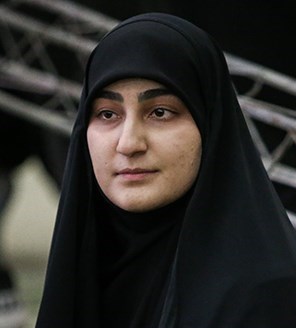
Zeinab Soleimani US Citizenship Claims: What the Evidence Shows
The death of Iranian General Qassem Soleimani in a U.S. airstrike in January 2020 sparked a torrent of geopolitical upheaval and an equally intense wave of public discourse. Amidst the mourning and vows of revenge from Iran, a peculiar claim began circulating across social media: that Zeinab Soleimani, the general's daughter, held U.S. citizenship. This assertion, seemingly designed to highlight hypocrisy given her fiery anti-American rhetoric, quickly gained traction. However, a closer examination of the facts reveals a stark reality: there is no credible evidence to support these widely circulated claims. This article delves into the origins of these allegations, scrutinizes the available information, and discusses the broader context of misinformation in international relations.
Who is Zeinab Soleimani? A Profile in Rhetoric and Resistance
Zeinab Soleimani rose to international prominence in the immediate aftermath of her father's death. As the
Soleimani daughter, she delivered a powerful and emotionally charged speech at his funeral, which was attended by thousands of state-mandated mourners in Tehran. Her father, Qassem Soleimani, was the formidable head of the Islamic Revolutionary Guard Corps’ (IRGC) Quds Force, an elite foreign operations branch tasked with expanding Iranian influence and plotting international terrorist attacks. Under his leadership, the Quds Force significantly bolstered its reach in countries like Syria, Yemen, and Lebanon, and was believed to have established numerous terrorist networks globally.
At her father's funeral, Zeinab Soleimani minced no words, directly threatening the United States and its allies. "The US and Zionism must know that my father’s martyrdom will further awaken people in the axis of resistance and will tear down their spider nests," she declared, according to Iranian state media. She went on to issue a chilling warning to the families of American troops stationed in West Asia, stating they "will be awaiting the news of death of their children."
Her speech didn't stop there. She specifically named several high-profile leaders of groups aligned with Iran's "axis of resistance" as potential instruments of revenge for her father's death. These included Seyed Hassan Nasrallah of Lebanon’s Hezbollah, Syrian President Bashar al-Assad, Hamas leader Ismail Haniyeh, Palestinian Islamic Jihad leader Ziyad al-Nakhalah, and Abdul-Malik Badreddin al-Houthi of Yemen’s Houthi Ansarullah movement. These remarks underscored the deep-seated animosity and the potential for retaliatory actions in the region. For a deeper look into her powerful address, read
Soleimani's Daughter Vows Revenge, Blames "Crazy Trump".
She also took direct aim at then-President Donald Trump, who had ordered the airstrike that killed her father alongside Abu Mahdi al-Muhandis, the founder of the Hezbollah Brigades in Iraq. "Crazy Trump, don’t think that everything is over with my father’s martyrdom," she warned, adding, "Mr. Trump, the gambler! Families of American soldiers must spend their days waiting for their deaths and corpses." Her rhetoric, broadcast globally, painted her as a staunch defender of her father’s legacy and a vocal critic of U.S. foreign policy. To understand the broader implications of her message, explore
Iran's "Axis of Resistance": Zeinab Soleimani's Global Message.
Given this highly public and intensely anti-American stance, the rumors of her potentially holding U.S. citizenship were met with a mixture of outrage and disbelief, creating a perfect storm for misinformation.
Unpacking the US Citizenship Claims: Fact vs. Fiction
The assertion that Zeinab Soleimani held U.S. citizenship appears to have originated and gained significant traction on social media platforms, particularly Instagram, before her account was eventually deleted. These claims quickly went viral, fueling a narrative of hypocrisy and betrayal among some segments of the public. However, despite their widespread dissemination, these claims have consistently lacked any substantive evidence.
When fact-checkers and journalists investigated the matter, they found no verifiable information to substantiate the citizenship claims. A spokesperson for U.S. Citizenship and Immigration Services (USCIS), the federal agency responsible for immigration and naturalization, stated policy prevented them from commenting on individual cases. This standard response, while understandable from an agency perspective, often leaves a vacuum that can be filled by speculation. Nonetheless, the crucial point remains: **no official documentation, public record, or credible source has ever confirmed that Zeinab Soleimani possesses U.S. citizenship.**
The process of obtaining U.S. citizenship, whether by birth (Jus Soli), through naturalization, or derivatively through parents, involves clear legal procedures and documentation. For someone to be a U.S. citizen, especially an adult like Zeinab Soleimani, there would typically be a public record of their birth in the U.S. or naturalization. The absence of such evidence, despite intense public scrutiny, strongly points to the claims being unsubstantiated.
The allure of such a sensational claim lies in the stark contrast it presents: the daughter of a prominent figure in an adversarial nation, who publicly threatens the U.S., supposedly holding citizenship of that very nation. This irony makes the claim compelling, allowing it to bypass critical evaluation and spread rapidly through echo chambers online.
The Broader Landscape of Iranian-American Citizenship Rumors
The claims surrounding Zeinab Soleimani's citizenship are not isolated incidents. They often surface within a larger context of rumors and conspiracy theories related to Iranians acquiring U.S. citizenship. One such widely circulated, yet also unproven, claim emerged in 2015, suggesting that 2,500 Iranians received U.S. citizenship as part of the negotiations for the Iran nuclear deal (Joint Comprehensive Plan of Action, JCPOA). This claim, frequently linked to the Obama administration, was also debunked by fact-checking organizations, finding no evidence to support it. While the nuclear deal was a complex diplomatic effort, there was no provision within it that granted mass U.S. citizenship to Iranian nationals.
It's also worth noting that the reference context mentioned two U.S. residents from Iran, Ali Fereydoun and Fatemeh Ardeshir Larijani, who are relatives of other Iranian officials. Their status as U.S. residents, however, is distinct from U.S. citizenship and does not imply any connection to Zeinab Soleimani's alleged citizenship. Millions of individuals from various countries reside legally in the U.S. as green card holders, students, or under other visa categories, without being U.S. citizens. These separate cases are often conflated in the public discourse, further muddying the waters of fact and fiction.
The political sensitivity surrounding Iran-U.S. relations, coupled with ongoing debates about immigration policy, creates fertile ground for such rumors. These narratives often serve to galvanize specific political viewpoints, demonize individuals or groups, or undermine trust in official institutions. Understanding the distinction between legal residency, green card status, and full U.S. citizenship is crucial to navigating these complex discussions.
The Impact of Disinformation on Geopolitics
The rapid spread of unsubstantiated claims, such as those concerning the
Soleimani daughter's alleged U.S. citizenship, has tangible and often detrimental effects on geopolitics and public perception.
- Inflaming Tensions: In an already volatile relationship between Iran and the U.S., misinformation can exacerbate existing tensions, making diplomatic efforts harder and fueling distrust among populations.
- Eroding Trust: When false claims circulate widely, they can erode public trust in traditional media, government institutions, and even fact-checking efforts, leading to a more fractured and cynical information landscape.
- Propaganda Tool: Such claims can be weaponized as propaganda, used to discredit adversaries or to create internal narratives that bolster a particular political agenda. For instance, the claim of Zeinab Soleimani being a U.S. citizen could be used by some to paint her as a hypocrite, regardless of its veracity, thereby undermining her message to Iranian audiences.
- Distorting Reality: Misinformation creates a distorted reality, where emotional reactions often overshadow factual analysis, making it difficult for individuals to form informed opinions on critical international events.
For individuals, navigating this landscape requires a commitment to critical thinking. When encountering sensational claims, especially those lacking specific sources or contradicting common sense, it's wise to:
- Question the Source: Is the information coming from a reputable news organization or an unknown social media account?
- Look for Evidence: Does the claim provide verifiable facts, documents, or official statements?
- Cross-Reference: Check if other credible news outlets or fact-checking organizations have reported on or debunked the same claim.
- Consider the Motivation: Is there a clear agenda behind the dissemination of this information?
Conclusion
In the realm of international relations, where narratives can be as potent as military might, the truth often becomes a casualty of political maneuvering and sensationalism. The claims surrounding Zeinab Soleimani's alleged U.S. citizenship serve as a powerful example of how quickly unverified information can spread and influence public opinion. Despite widespread circulation on social media and the significant attention it garnered, rigorous fact-checking has consistently revealed a critical absence of any credible evidence to support these assertions. Neither official U.S. immigration bodies nor independent investigations have found any proof that the
Soleimani daughter holds U.S. citizenship. While the allure of ironic revelations is strong, especially in highly charged political environments, it is imperative to distinguish between speculative claims and verifiable facts. In a world awash with information, the responsibility falls on all of us to seek out and uphold the truth, ensuring that our understanding of complex global events is based on evidence, not rumor.