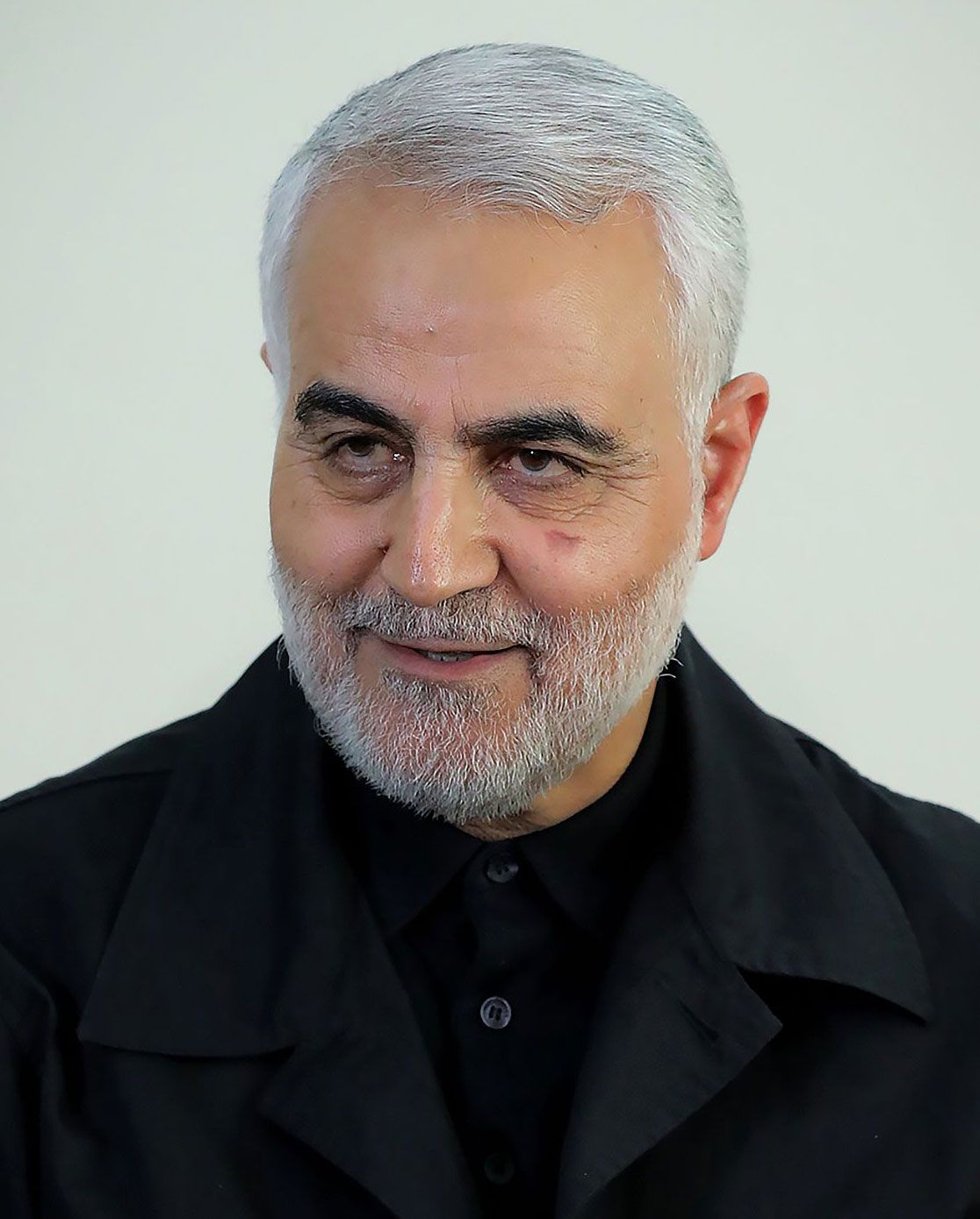
The assassination of Iranian General Qasem Soleimani in January 2020 sent shockwaves across the Middle East and beyond, dramatically escalating tensions between Iran and the United States. While the world watched for an official response from Tehran, it was the powerful, defiant voice of Soleimani's daughter, Zeinab Soleimani, that delivered a global message of vengeance and steadfast commitment to her father's legacy. Her impassioned address at his funeral, attended by millions, was not merely a eulogy but a fiery declaration, solidifying her as a prominent voice within Iran's "Axis of Resistance."
The Roar of Vengeance: Zeinab Soleimani's Fiery Address
In the immediate aftermath of the U.S. drone strike that killed Qasem Soleimani and Iraqi militia leader Abu Mahdi al-Muhandis, Iran mobilized its citizens for a series of massive state-mandated funerals. These elaborate processions, particularly the one in Tehran, served as powerful propaganda tools, showcasing widespread grief and galvanizing anti-American sentiment. It was amidst this emotionally charged atmosphere that Zeinab Soleimani stepped forward, becoming the spokesperson for her bereaved family and, in many ways, for the Iranian regime's hardline stance.
Her address was a direct challenge to the United States and particularly to then-President Donald Trump. According to various Iranian and Arab news agencies, Zeinab Soleimani issued stark warnings, asserting that the families of American soldiers in West Asia (a term often used by Iranian media for the Middle East) would soon "be awaiting the news of death of their children." She famously declared, targeting Trump directly, "Crazy Trump, don’t think that everything is over with my father’s martyrdom." She further added, "Mr. Trump, the gambler! Families of American soldiers must spend their days waiting for their deaths and corpses," signaling a long-term commitment to retribution.
Beyond these immediate threats, Zeinab Soleimani framed her father's death as a catalyst for greater awakening within the "Axis of Resistance." She proclaimed, "The US and Zionism must know that my father’s martyrdom will further awaken people in the axis of resistance and will tear down their spider nests." This statement underscored a belief that Soleimani's demise would not weaken but rather strengthen the network of allied groups aligned with Iran. Her speech resonated deeply with supporters, providing a sense of continuity and resolve in the face of perceived Western aggression. To delve deeper into her powerful rhetoric, you can read more about Soleimani's Daughter Vows Revenge, Blames "Crazy Trump".
Understanding the "Axis of Resistance" and its Architects
The "Axis of Resistance" is not merely a rhetorical construct but a tangible network of state and non-state actors aligned with Iran's strategic objectives in the Middle East. At its core, this alliance seeks to counter American and Israeli influence, promote Iranian regional hegemony, and support Shiite and anti-Western movements. Qasem Soleimani, as the long-serving head of the Islamic Revolutionary Guard Corps’ (IRGC) Quds Force, was undoubtedly its principal architect and operational commander.
Under Soleimani’s leadership, the Quds Force dramatically expanded its reach and capabilities. It nurtured and empowered various proxy groups in neighboring countries, transforming them into formidable forces. In Syria, the Quds Force provided crucial support to President Bashar al-Assad's regime, helping it survive a brutal civil war. In Yemen, it backed the Houthi Ansarullah movement, turning a localized conflict into a broader regional proxy war with Saudi Arabia. Lebanon saw the significant strengthening of Hezbollah, a powerful political party and militant group that virtually operates as a state within a state, thanks to decades of Iranian patronage and Soleimani's strategic guidance.
The network also extended into Iraq, where the Popular Mobilization Forces (PMF) emerged as a coalition of largely Shiite, pro-Iranian militias. Initially formed to combat ISIS, these groups, including the Hezbollah Brigades founded by Abu Mahdi al-Muhandis, later redirected their efforts against the U.S. presence in the country. Zeinab Soleimani, in her speech, explicitly named several key leaders whom she expected to help avenge her father:
- Seyed Hassan Nasrallah: Secretary-General of Lebanon’s Hezbollah resistance movement.
- Bashar al-Assad: President of Syria.
- Ismail Haniyeh: Leader of Hamas, the Palestinian Islamist organization.
- Ziyad al-Nakhalah: Leader of Palestinian Islamic Jihad.
- Abdul-Malik Badreddin al-Houthi: Leader of Yemen’s Houthi Ansarullah movement.
This list highlights the diverse and geographically widespread nature of the "Axis," spanning from the Levant to the Arabian Peninsula. Soleimani's assassination was perceived by Iran as a direct attack on this carefully constructed network, prompting the vigorous calls for retaliation.
Geopolitical Ramifications and Future Outlook
The immediate geopolitical consequence of Soleimani's death was a severe spike in tensions, culminating in Iran's retaliatory missile strikes on U.S. bases in Iraq. While direct military confrontation was avoided, the incident left a lasting impact on regional dynamics. Zeinab Soleimani's claim that her father's death would forge a "historic bond" between Iran and Iraq, countering "vicious plots to divide" them, reflects Iran's strategic ambition to cement its influence in its western neighbor. However, the reality on the ground is more complex, with internal Iraqi divisions and varying sentiments towards both Iranian and U.S. presence.
The "Axis of Resistance" itself faces a unique challenge. While Soleimani's charismatic leadership and strategic prowess were central to its cohesion, his death forced the network to adapt. Some analysts believe it could lead to fragmentation, while others argue it might foster greater decentralization and resilience, as individual groups become more autonomous but still aligned with Iran's overarching goals. The rhetoric of Zeinab Soleimani, therefore, serves not only as a call for revenge but also as a powerful message of continuity and resilience, aiming to solidify the resolve of the "Axis" members and their supporters.
From a broader perspective, the events underscored the fragility of peace in the Middle East and the complex interplay of state and non-state actors. The U.S. withdrawal from the 2015 nuclear deal and subsequent "maximum pressure" campaign on Iran only intensified this volatility, making figures like the Soleimani daughter and her pronouncements key indicators of the region's trajectory.
Debunking Misinformation: The Zeinab Soleimani US Citizenship Claims
In the emotionally charged atmosphere following Qasem Soleimani's death, various rumors and misinformation campaigns quickly spread. One particularly persistent and unsubstantiated claim asserted that Zeinab Soleimani held U.S. citizenship. This rumor gained traction on social media platforms, including Instagram before the account spreading it was deleted, and was often used to discredit her powerful rhetoric by suggesting hypocrisy.
However, thorough fact-checking by various independent media outlets found no evidence whatsoever to support these claims. Official U.S. government sources, such as U.S. Citizenship and Immigration Services (USCIS), adhere to strict privacy policies that prevent them from confirming or denying an individual's citizenship status. This policy, while standard, can sometimes leave room for speculation, but in this specific case, there were no credible documents, official statements, or verifiable records to substantiate the claim about Zeinab Soleimani. The rumors often conflated her with other Iranian individuals who may have obtained U.S. residency or citizenship under different circumstances, such as during the 2015 nuclear deal negotiations where a limited number of Iranians did receive U.S. citizenship or green cards.
It is crucial in times of geopolitical tension to verify information carefully and rely on credible sources. Misinformation, especially when amplified online, can further escalate conflicts and deepen societal divisions. The case of the Soleimani daughter citizenship claim serves as a potent reminder of the importance of media literacy and critical thinking. For a detailed breakdown of these claims and the available evidence, consider reading Zeinab Soleimani US Citizenship Claims: What the Evidence Shows.
Zeinab Soleimani's emergence as a vocal figure in the wake of her father's assassination underscored the enduring legacy of Qasem Soleimani and the deep-seated ideological commitments within Iran's "Axis of Resistance." Her defiant messages of vengeance against "Crazy Trump" and America, alongside her rallying cry for the "Axis," were designed to galvanize support, reaffirm resolve, and project strength in a moment of profound loss. While misinformation campaigns attempted to undermine her credibility, her role in articulating Iran's response highlights the complex interplay of personal grief, political rhetoric, and geopolitical strategy in the ever-turbulent Middle East. The reverberations of her words continue to influence regional dynamics, underscoring the long shadow cast by Qasem Soleimani and the unwavering commitment of his ideological heirs to his vision.